

What We Do
Freedom is within reach by challenging mindsets and behaviors. This requires a systemic approach to address the underlying causes and symptoms of exploitation and slavery. By working with strategic partners, we believe that we can affect change at different levels using inter-connected strategies.
We protect
We protect survivors of exploitation by identifying them in transit points as well as destination areas. We operate long-term shelters and halfway houses to provide U-turn services that protect, heal, and reintegrate victims from a position of vulnerability to empowerment.
We build social movements
We mobilize young people through the support of non-traditional partners such as church, schools, LGUs, private sector and other volunteer groups to create advocacy, referral and capacity-building networks in source and destination areas.
We influence policies and implementation
We influence policy-making, program development and service enhancement through solutions-based research and capacity-building programs, from local to international levels.
We prevent
We reduce vulnerabilities of families and children by raising their awareness, creating community-watch mechanisms, and countering socio-cultural beliefs that perpetuate trafficking. In the long-term, we provide economic advancement opportunities through social entrepreneurship initiatives and mainstreaming efforts to anti-poverty programs.
Centers of Hope
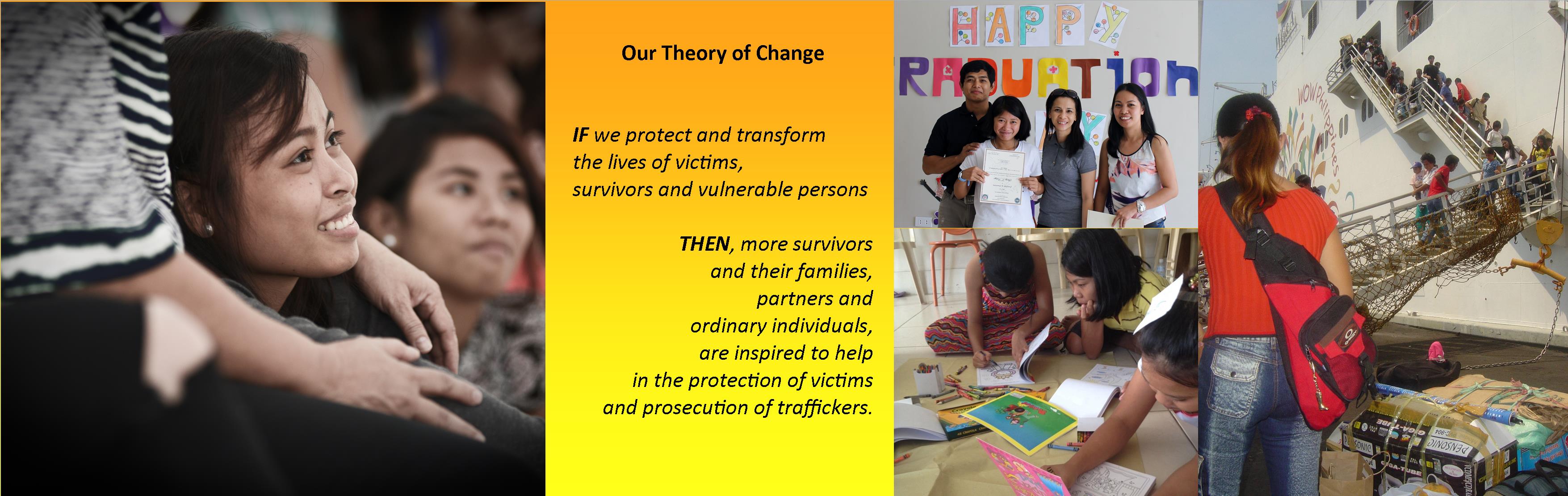
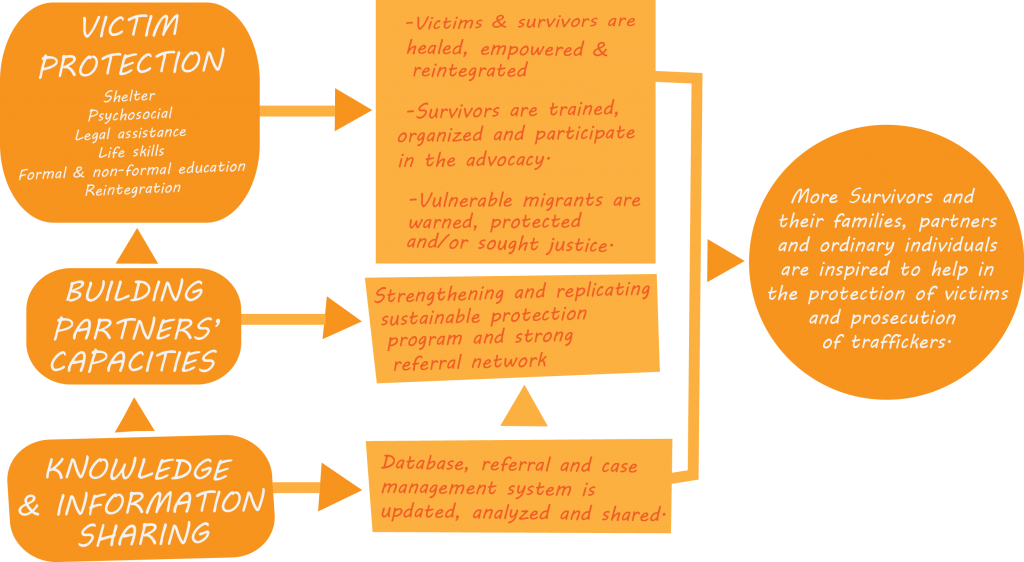
The Centers of Hope comprise VF’s interlinked shelters and referral networks dedicated to provide access to holistic protection services for trafficked and exploited girl-children and women to expand key life-options that prevent re-trafficking.
The network of safe houses and halfway houses in the port and airports serve as the heart of VF’s protection services. Social workers, psychologists and housemothers work 24/7 to to provide one-stop-shop services such as victim identification, psycho-social counseling, interception and rescue operations, investigation and filing of legal cases.
Task Forces play an important role as partners in the operations. Together, we operate Help Desks in these transit areas to provide protective information to vulnerable people on the move and provide safe migration advise to those who suspect red flag indicators. Recently, the Expanded Anti-Trafficking Law punishes the act of attempted trafficking. This provides a greater opportunity for duty-bearers to abort trafficking operations as they happen.
These centers are also a refuge from intimidation and threat for long-term witness protection if victims decide to pursue legal action. Victims involving crimes under related laws such as Batas Kasambahay, Anti-Child Labor and Violence Against Women are also protected. While staying at these centers, victims are provided with much needed quality life-skills training, access to education. and psycho-social support to help them heal and transform their lives, as well as to prepare them for independent living or repatriation to families.
The complete “U-turn” process from vulnerability to empowerment can either culminate into return to formal school, employment readiness or entrepreneurship – all of which are key life-options that prevent re-trafficking.
The Centers of Hope has three (3) core strategies, to wit:
- Protection and Empowerment of Vulnerable Persons, Victims, and Survivors
- Building the Capacity of Partners Towards Institutionalization of Protective Services
- Knowledge and Information Sharing
iFIGHT Movement
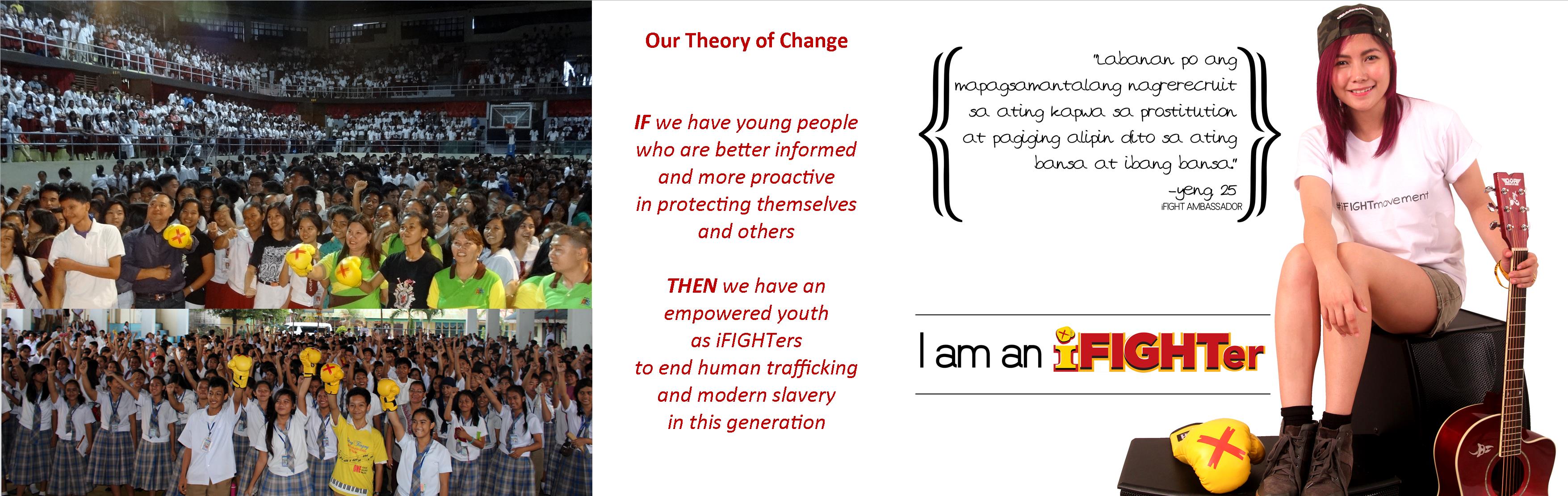
 The iFIGHT Movement is a youth movement against human trafficking, modern slavery, exploitation, and all other related forms of abuse. It raises awareness on the issue to prevent further incidences of human trafficking. It targets the youth, particularly the students, by harnessing partnerships with different schools and universities across the Philippines.
Since the youth are the most vulnerable to trafficking, the movement seeks to empower the vulnerable so that they become invulnerable; ashamed to confident, and fearful to fearless. “I” indicates the consciousness of one’s own self, choices, and actions; while “FIGHT” is the role of the youth in this movement. Hence the phrase, “iFIGHT.”
The strategy is to equip the youth with necessary knowledge and skills in the fight against human trafficking.
The movement seeks to train the youth. Since it is the movement’s goal to turn the youth into fighters, they must know how to fight properly and intelligently.
The movement also seeks to empower the youth; empowerment defined as the ability to make good choices. It also involves the youth being catalysts for change. They must know how to be engaged and involved in activities that would prevent others from exploitative situations.
For more information, visit our website and join our conversations on facebook.
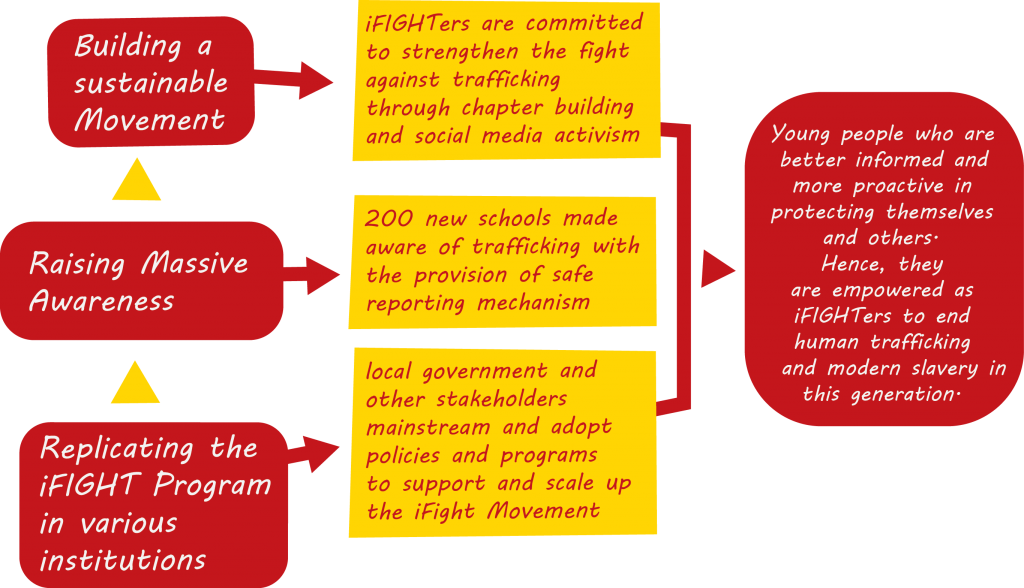
The core strategies for iFIGHT include:
- Replicating the iFIGHT Program in various institutions
- Raising massive awareness
- Building a sustainable movement
The Policy and Advocacy Resource Center
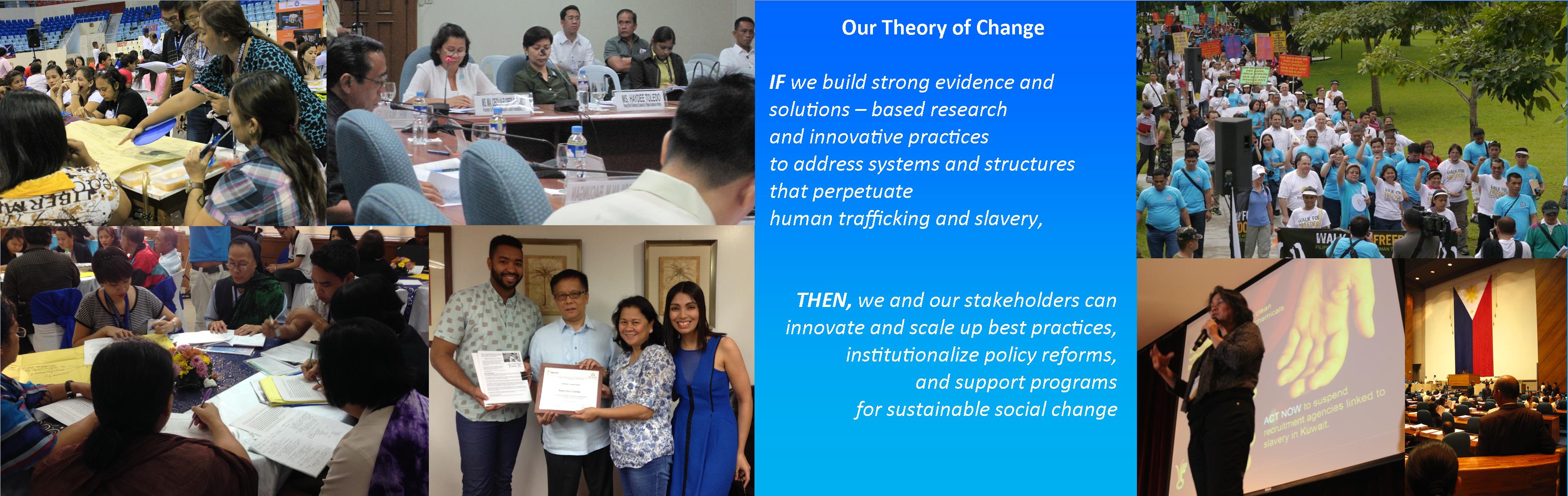
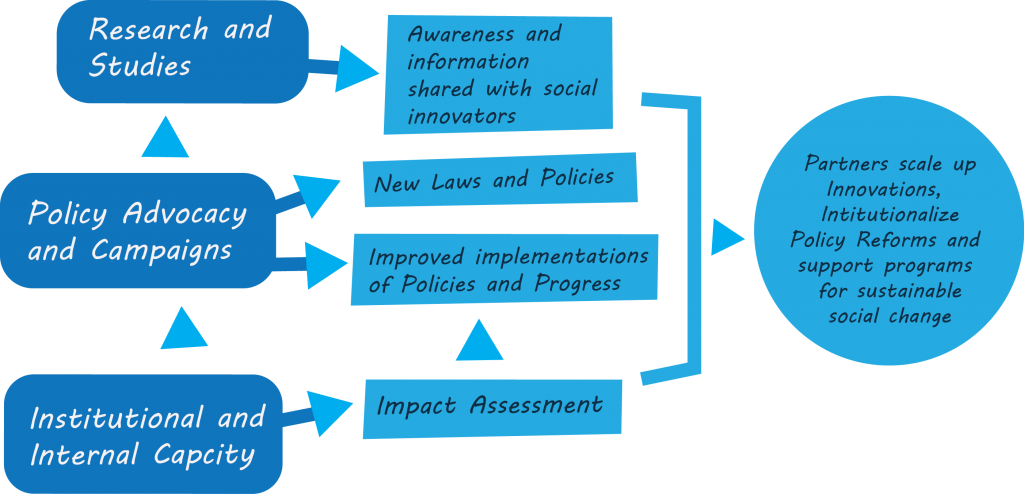
 The Policy and Advocacy Resource Center is a knowledge management base that continue to study and develop innovative practices to address systems and structures that perpetuate human trafficking and slavery.
Through its network of volunteers and partners, the VF Policy and Advocacy Resource Center continues to inspire excellence in managing knowledge and information sharing. The Resource Center works with experts and leaders in gathering evidence of what works and learning what generates impact on the ground.
The Center caters to the evolving needs of social innovators especially those who face barriers and maximize enhancers in the implementation of new laws on trafficking and domestic work. It leverages on VF’s two decades of grassroots experience, its national and international network and new media tools and advocacy methods
The Center customizes capacity building for interested partners using a combination of strategic planning process, practical case study-method, coaching and mentoring, and field visits. It shares digital toolkits and optimizes use of online tools such as websites and social media in disseminating information and acquiring feedback. This mechanism for information sharing is the backbone of the resource center as it serves international and local champions.
The Policy and Advocacy Resource Center core strategies include:
- Produce strong evidence and solutions based research and studies
- Lead policy advocacy and campaigns
- Strengthen institutional capacity
Ventures for Freedom
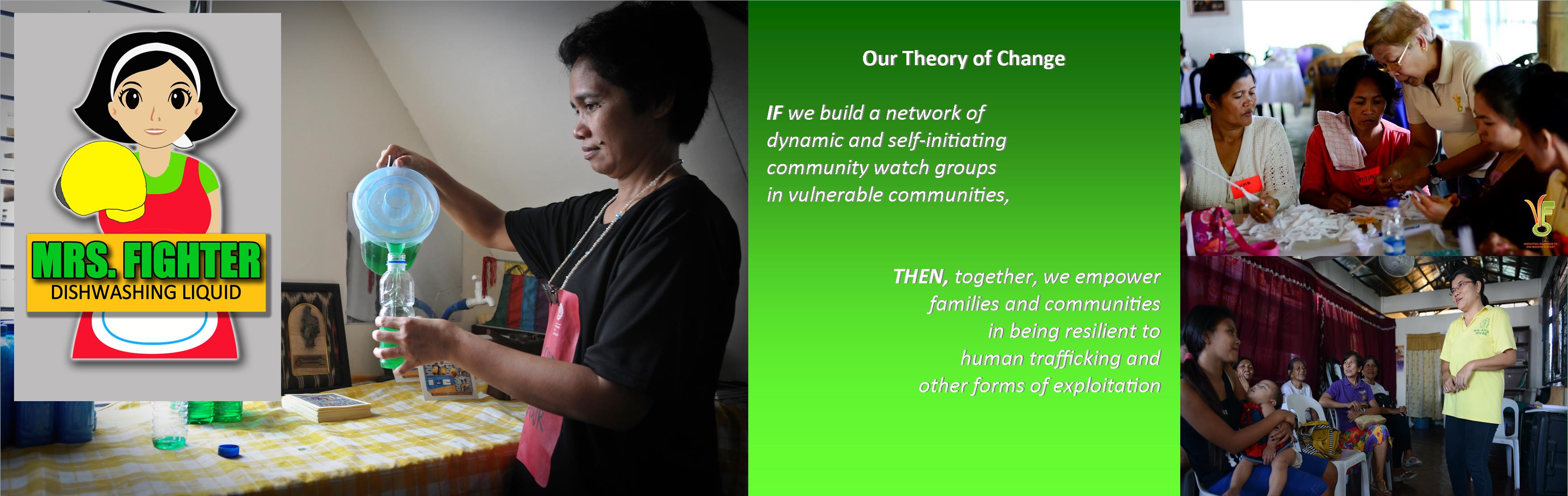

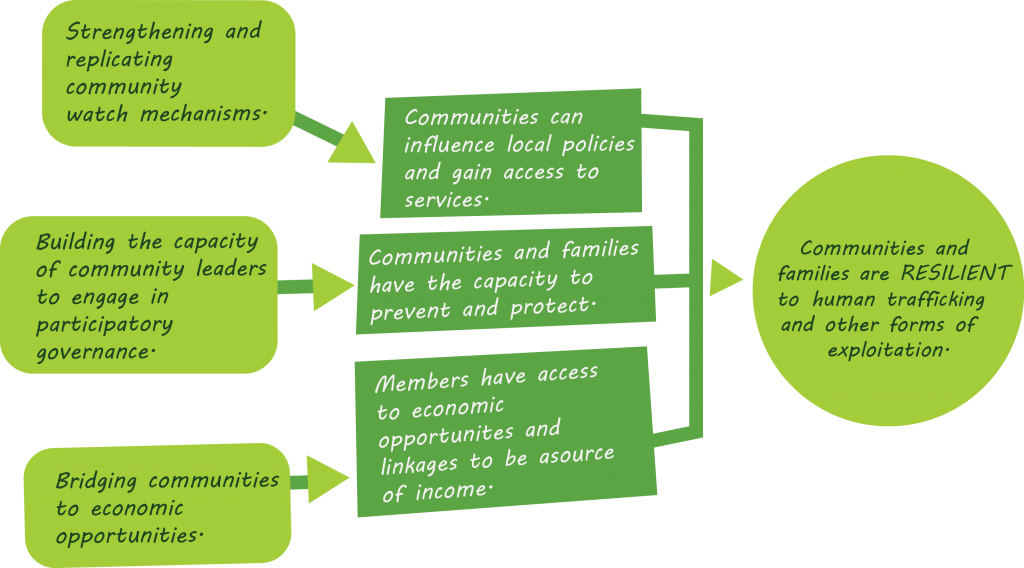
Ventures for Freedom strengthens the capacities of families and communities to prevent trafficking and slavery through incubation of innovative strategies which will increase the families and communities’ defense against human trafficking. Increased access to education, life-skills coaching, business or enterprise development, business mentoring and access to financial services are key ingredients to prevention.
Since 1996, VF established the Bantay Komunidad (BK) or Community Watch Network in Manila and Negros to monitor the vulnerability of children to abuse and exploitation. Parents report and immediately act upon such cases and report trafficking activities to VF to make the communities safer for children.Visayan Forum focuses on the family as an institution, by providing community empowerment programs.
VF alone cannot win the fight against modern slavery if it does not attack the culture and mindset that perpetuates trafficking. To address the root causes of human trafficking, VF continues to create a preventive and innovative community-based model anchored on stakeholders’ ownership, solidarity and local resource mobilization.
Hence, VF’s fourth pillar, the Ventures for Freedom, addresses root causes of trafficking especially the lack of economic opportunities among the poor.
Ventures for Freedom is an educative strategy providing holistic life skills and business coaching for parents in source communities to increase their access to local opportunities. It entails mobilizing local staff, volunteers and partners in providing dynamic coaching to parents about life skills and business development through multi-partnership support. Dynamic learning processes and follow-up coaching is as important as delivering services and trainings to beneficiaries. Coaching is important in nurturing resiliency, life skills and entrepreneurial potential. Coaches can be more effective by using “rules-of-thumb” knowledge about different life and business situations. In the long-run, coaching is a sustainable way of getting to know deeply the needs of parents, which is a foundation of long-term partnerships.
VF builds the capacity of other CSOs to mainstream the community vigilance model by training trainers. Through this, CSOs will be able to impart to parents knowledge and skills on child protection, prevention of trafficking, and decreasing violence at home, which builds the parent’s capacities negotiate power in their relationship with local government units and CSOs in the area.
Ventures for Freedom’s core strategies include:
- Strengthening and replicating community - watch mechanisms
- Building the capacity of community leaders to engage in participatory governance
- Bridging communities to economic opportunities